
The Origins of SYNC™
The Urgent Need: Reclaiming Youth Mental Health
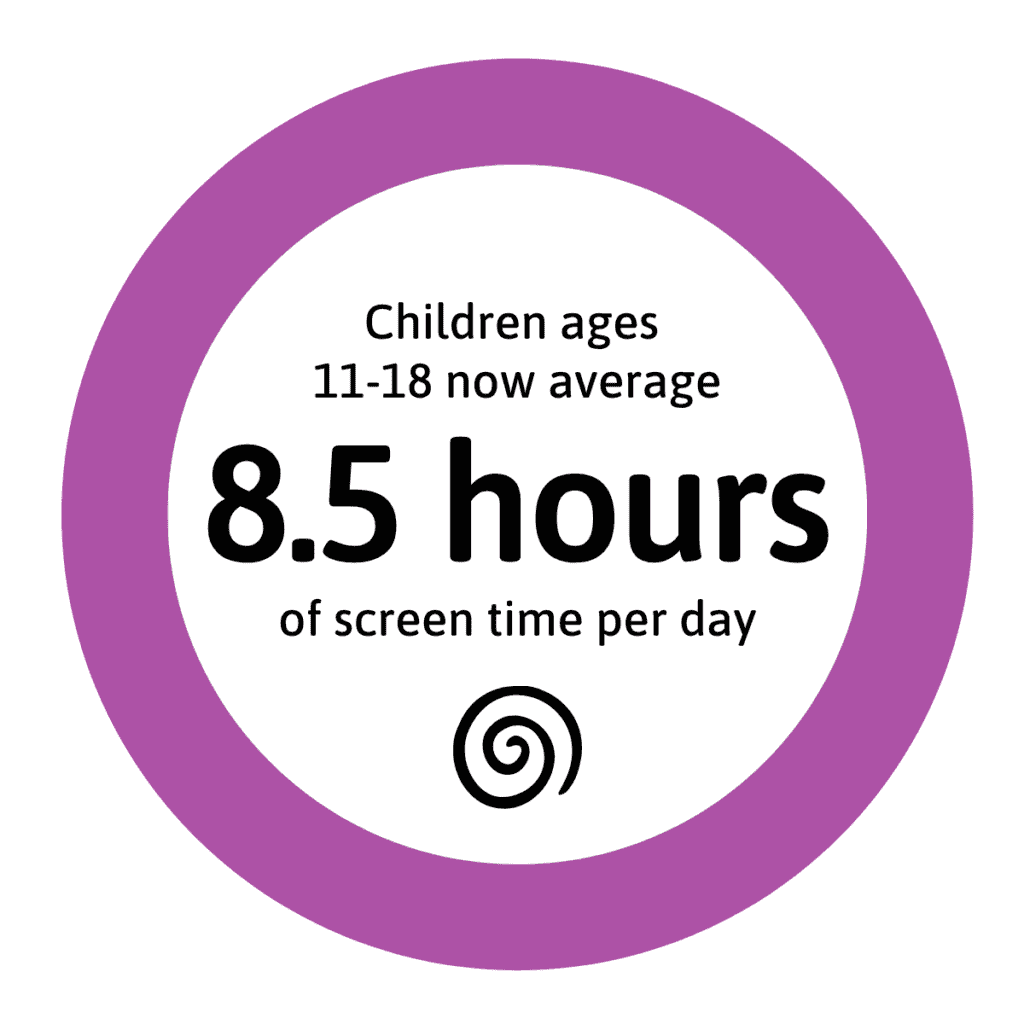
Youth mental health is in a state of crisis and the statistics are alarming. Teen depression doubled between 2012 and 2024. Children ages 11-18 now average 8.5 hours of screen time per day — that’s more than a full-time job!
In our own state of Wisconsin, 53% of teens report using screens after midnight and 52% report experiencing anxiety. Research indicates that excessive screen time can reshape the developing brain in patterns similar to substance abuse and is linked to poorer emotional regulation.
SYNC was created to address these challenges by shifting local norms from continuous scrolling to intentional technology use. Our work is about more than just reducing screen time. It’s about reclaiming the experiences that help young people achieve their full potential and fostering connections rooted in belonging — both online and offline.

Presented by ThedaCare™; Powered by Community
The SYNC movement began within ThedaCare’s Community Health Action Teams (CHAT). Recognizing that youth were increasingly “connected” yet out of sync, ThedaCare partnered with Children and Screens:Institute of Digital Media and Child Development to launch a discovery phase to understand the local landscape of digital media and mental health.
The SYNC movement got its start through ThedaCare’s Community Health Action Teams (CHAT). With youth mental health a growing concerns in the communities the healht system served, the ThedaCare hosted 6 “plunge” events in late 2023 to understand the impact of phones and digital media on youth wellbeing.
Informed by youth, organizers heard from youth, listened to teachers, coaches, law enforcement, parents and others including national internet safety experts. These deep listening sessions ensured that SYNC would be grounded in local, real experience. The plunge events led all 6 communities (Fox Cities, Berlin, Shawano, New London, Waupaca and Wild Rose) to envision their communities as places where intentional media use leads to improved wellbeing for children, youth, families and the community as a whole.
Grounded in Evidence: The Models That Shape SYNC
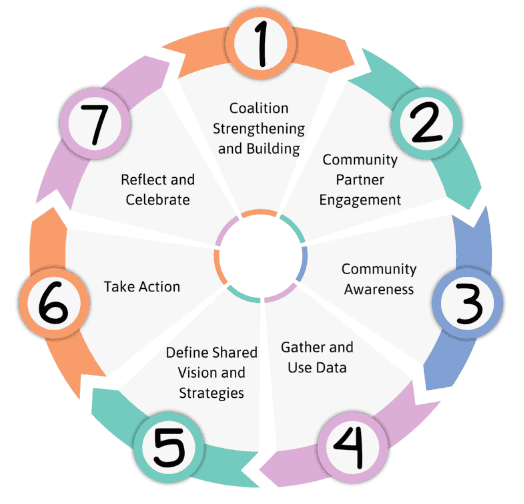
To build a sustainable framework for change, SYNC analyzed 134 different resources and looked at proven global and national models. Our unique 7-step SYNC process is specifically informed by:
The Icelandic Prevention Model
A community-wide, evidence-based approach that reduces youth substance use by strengthening family involvement, increasing healthy extracurriculare opportunities, fostering supportive school environments, and using local data to guide coordinated action
Social Ecological Model
Evidence-based model addressing how individual behaviors are shaped by relationships, institutions, community and society – reinforcing the need for coordinated multi-level strategies.
Strategic Consulting
Developed in partnership with Robin Katrick of Katrick Consulting, our model is designed to be a practical, common language for cross-sector partners
Current Efforts: Helping Our Communities Thrive
SYNC is currently active across six Wisconsin communities, including Appleton, New London, Princeton, Shawano, Waupaca and Wild Rose. We’re working to embed support into five key “domains” of a young person’s life:
Children and Youth
Individual digital literacy and peer influence
Parents and Caretakers
Family norms and adult modeling of screen use
Schools and Daycares
Daily structure and media use policies
Youth-serving Orgs
Enriching, screen-free opportunities
Community Partners
Broader norms and cross-sector collaboration
By empowering local Community Coordinators and coalitions, we are helping each region build off its own unique strengths to create a healthier digital future.
Get Involved
Change must be collective, not isolated. Whether you are a young person, caregiver, educator or community leader, there’s a place for you in this movement.
Our Partners





School Partners
Our Funders